Tech Tree of the Web
The history of web technology, 1945 to now: 112 ideas and the lines between them. Drag, scroll or press ← → to travel. Open any one for its story.
Xen, 2003. Era IV, The Dynamic Web.
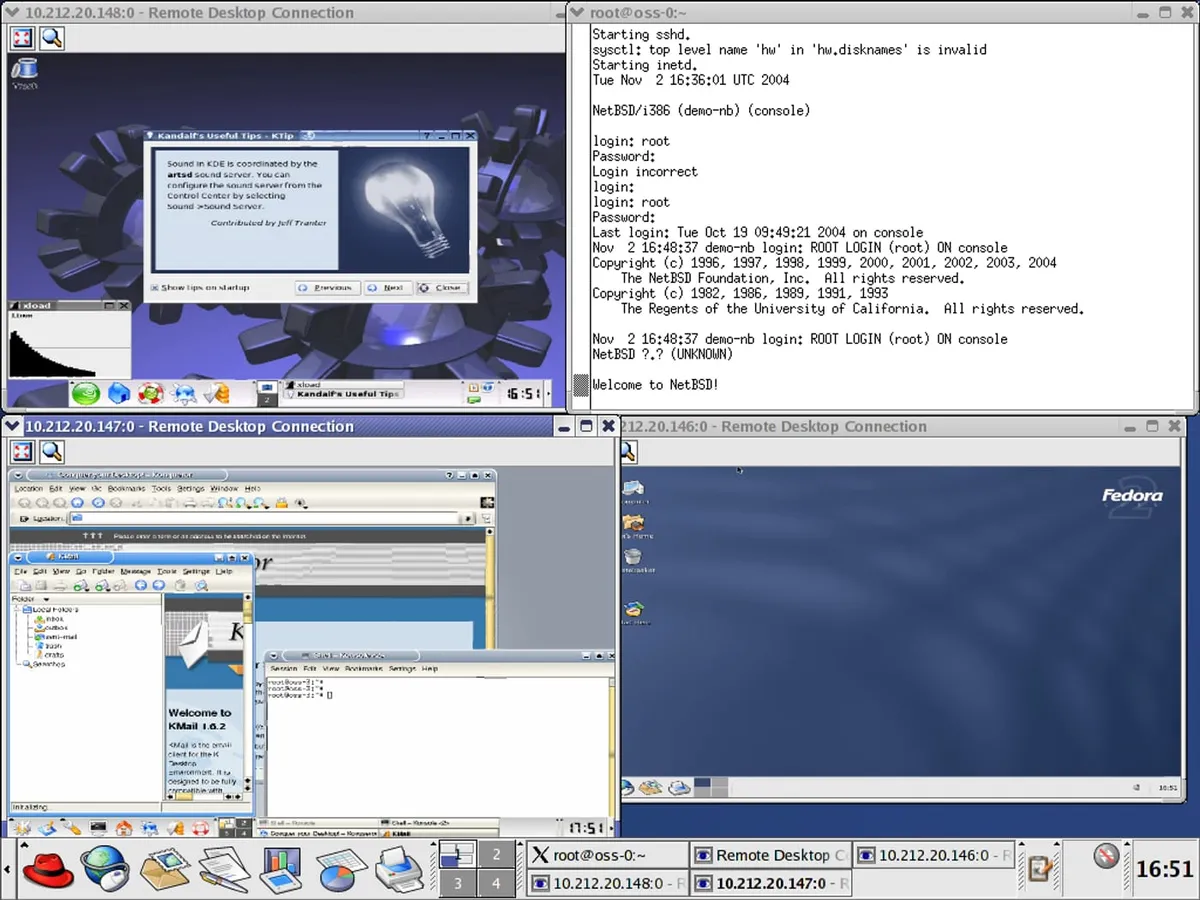
Screenshot of Xen running NetBSD and three Linux distributions at once. The original uploader was Kesla at English Wikipedia., GPL
Key details
- When
- 2003 (first release 2 Oct; SOSP paper October)
- Who
- Ian Pratt, Keir Fraser, Paul Barham, Steven Hand and colleagues, University of Cambridge Computer Laboratory
- Where
- University of Cambridge Computer Laboratory, Cambridge, UK
- Answered
- Existing virtualization needed special hardware, sacrificed performance for full binary compatibility, or offered weak isolation.
- Led to
- XenSource and Citrix products, and the hypervisor under Amazon EC2 from 2006 to 2017.
Xen
Ran many operating systems on one x86 server with little overhead through paravirtualization.
Facts
- Xen began as a research project at the University of Cambridge under senior lecturer Ian Pratt and his PhD student Keir Fraser. 1
- The SOSP 2003 paper targeted hosting up to 100 virtual machines on one server at a performance overhead of at most a few percent. 2
- Porting Linux to Xen's paravirtualized interface took 2,995 changed or added lines, about 1.36% of the x86 code base. 2
- Amazon EC2 used Xen from August 2006 to November 2017. 1
- Citrix completed its acquisition of XenSource on October 22, 2007, and Xen moved to the Linux Foundation on April 15, 2013. 1
Quirks
- Early contributor Anil Madhavapeddy said Xen started as a bet on whether Fraser could boot multiple Linux kernels on the same hardware in a weekend. 1