Tech Tree of the Web
The history of web technology, 1945 to now: 112 ideas and the lines between them. Drag, scroll or press ← → to travel. Open any one for its story.
NCSA Mosaic, 1993. Era III, The Early Web.
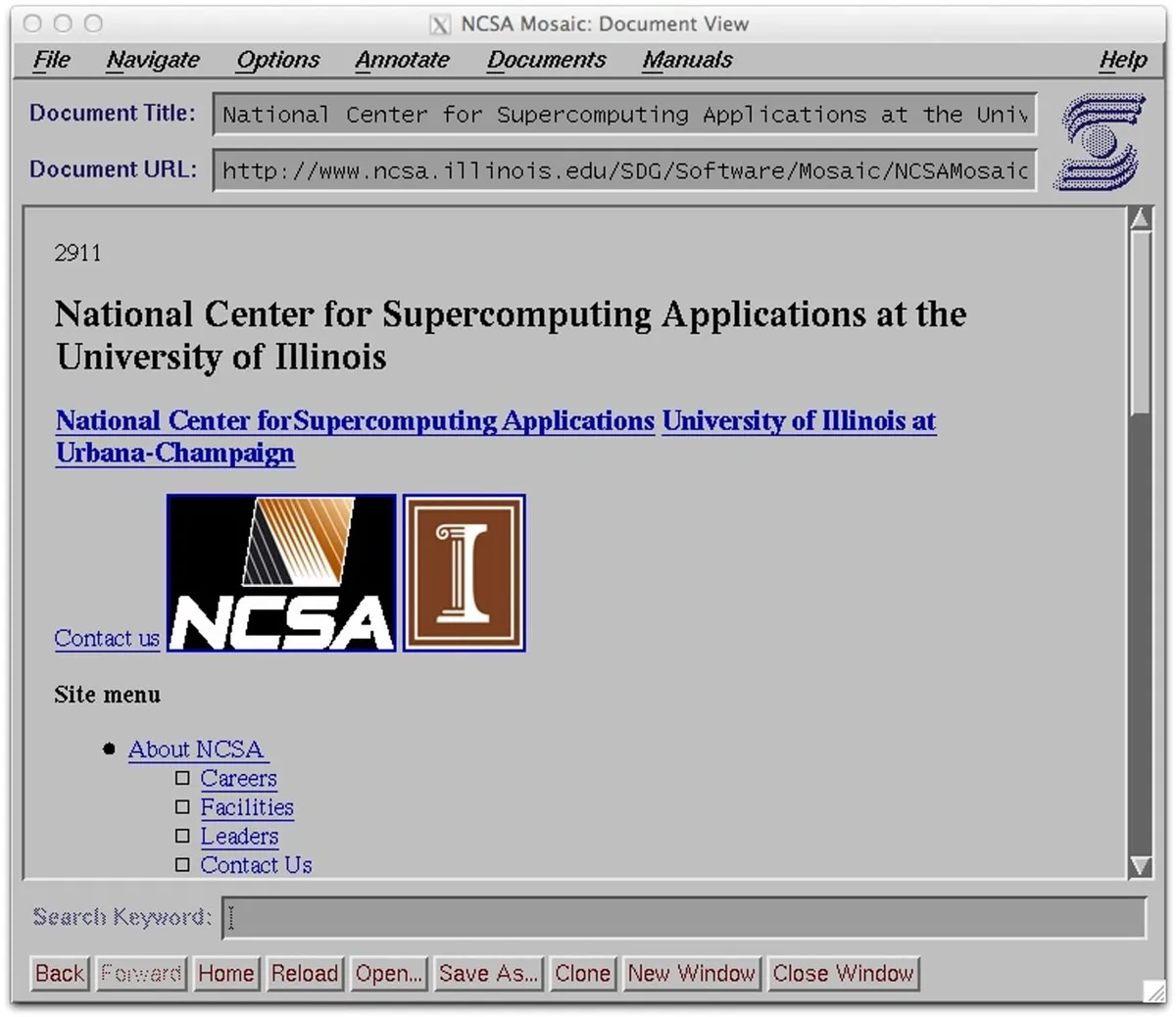
Screenshot of the NCSA Mosaic browser for X. Charles Severance, CC0
Key details
- When
- 1993 (version 1.0 on 21 Apr)
- Who
- Marc Andreessen and Eric Bina at NCSA
- Where
- National Center for Supercomputing Applications, University of Illinois at Urbana-Champaign
- Answered
- It answered harder-to-install browsers that showed images in separate windows with a dependable browser that put graphics inline.
- Led to
- Its licensed offshoot Spyglass Mosaic became Internet Explorer, and its authors went on to build Netscape Navigator.
NCSA Mosaic
Put images inline with text and ran on ordinary PCs and Macs, turning the web into something people wanted to use.
Facts
- Development began in December 1992, and version 1.0 was released on April 21, 1993. 1
- The IMG tag arrived in version 0.10 in March 1993, adding inline GIF and XBM images. 1
- Windows and Mac versions followed in September 1993, and downloads reached 50,000 a month by mid-1994. 1
- Microsoft licensed Spyglass Mosaic in 1995 for US$2 million and renamed it Internet Explorer. 1
- Andreessen and Bina built on the earlier Viola and Midas browsers and on CERN's code library. 2
Quirks
- Spyglass Mosaic, the basis of Internet Explorer, was written from scratch and never used NCSA's Mosaic source code. 1