Tech Tree of the Web
The history of web technology, 1945 to now: 112 ideas and the lines between them. Drag, scroll or press ← → to travel. Open any one for its story.
HTML5, 2008. Era V, The Platform.
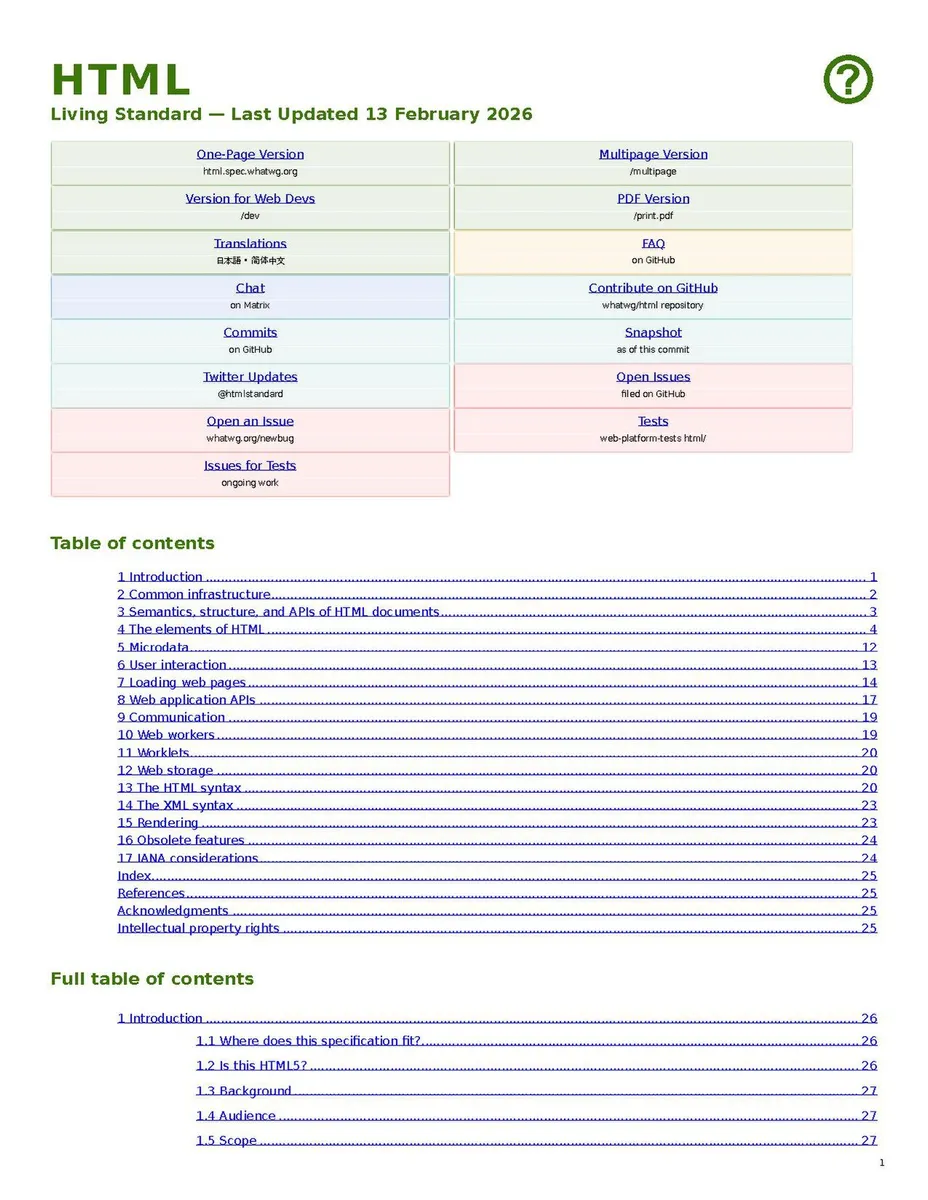
The first page of the WHATWG HTML Living Standard, the specification that grew out of the HTML5 effort. WHATWG (Apple, Google, Mozilla, Microsoft), CC BY 4.0
Key details
- When
- 2008 (first W3C draft 22 Jan); WHATWG work from 2004
- Who
- Ian Hickson (Google) and David Hyatt (Apple), WHATWG, W3C
- Where
- WHATWG and W3C
- Answered
- It answered the W3C's stalled HTML work and the reliance on plugins with a new revision of HTML4, XHTML1 and the DOM2 HTML API.
- Led to
- It became a W3C Recommendation in 2014 and then the WHATWG HTML Living Standard, which the W3C accepted as authoritative in 2019.
HTML5
Standardized video, canvas and web app APIs in HTML itself, retiring the need for plugins like Flash.
Facts
- The WHATWG formed after Mozilla and Opera presented a position paper at a W3C workshop in June 2004. 1
- Ian Hickson and David Hyatt edited the first W3C public working draft, dated 22 January 2008. 2
- HTML5 was released as a W3C Recommendation on 28 October 2014. 1
- Steve Jobs's April 2010 letter "Thoughts on Flash" drew mainstream attention to HTML5. 1
- On 28 May 2019 the W3C ceded authority over the HTML and DOM standards to the WHATWG. 1