Tech Tree of the Web
The history of web technology, 1945 to now: 112 ideas and the lines between them. Drag, scroll or press ← → to travel. Open any one for its story.
CSS2, 1998. Era III, The Early Web.
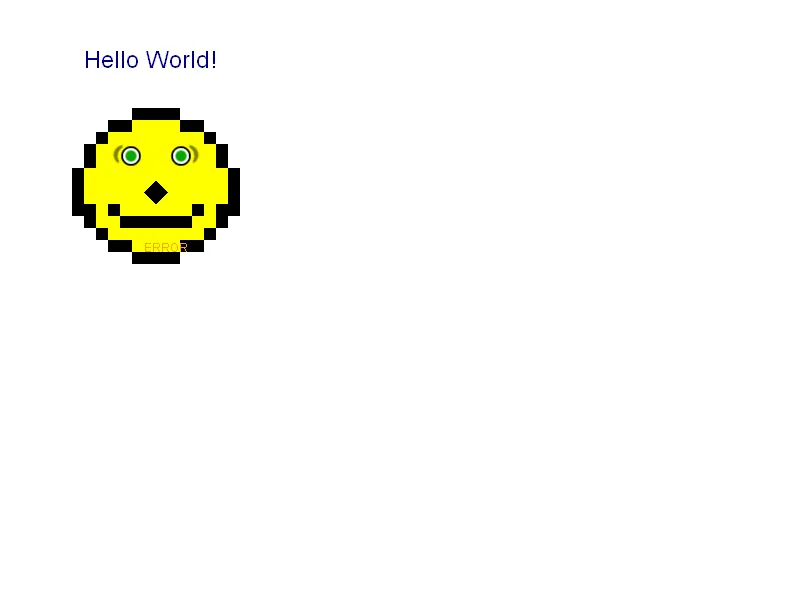
The Acid2 test rendered correctly in Opera 9.25: a smiley face drawn entirely with CSS2 positioning, boxes and generated content, the test that browsers had to pass to prove CSS2 support. Remember the dot (screenshot); Acid2 by the Web Standards Project, Public domain
Key details
- When
- 1998 (W3C Recommendation, 12 May 1998)
- Who
- Bert Bos, Håkon Wium Lie, Chris Lilley and Ian Jacobs
- Where
- W3C CSS Working Group
- Answered
- It extended CSS1, keeping nearly all valid CSS1 style sheets valid, with positioning and media-specific style sheets.
- Led to
- It was revised as CSS 2.1, a Recommendation in June 2011, and served as the base for the CSS level 3 modules.
CSS2
Added positioning and media types, so a stylesheet could place boxes on screen and target print.
Facts
- W3C published CSS2 as a Recommendation on 12 May 1998, edited by Bert Bos, Håkon Wium Lie, Chris Lilley and Ian Jacobs. 2
- The CSS Working Group had created CSS level 2 on November 4, 1997. 1
- CSS2 supported media-specific style sheets for visual browsers, aural devices, printers, braille devices and handhelds. 2
- It added content positioning, downloadable fonts, table layout, internationalization features and automatic counters and numbering. 2
- CSS 2.1 became a Candidate Recommendation on 25 February 2004 and a W3C Recommendation on 7 June 2011. 1