Tech Tree of the Web
The history of web technology, 1945 to now: 112 ideas and the lines between them. Drag, scroll or press ← → to travel. Open any one for its story.
Ajax, 2005. Era IV, The Dynamic Web.
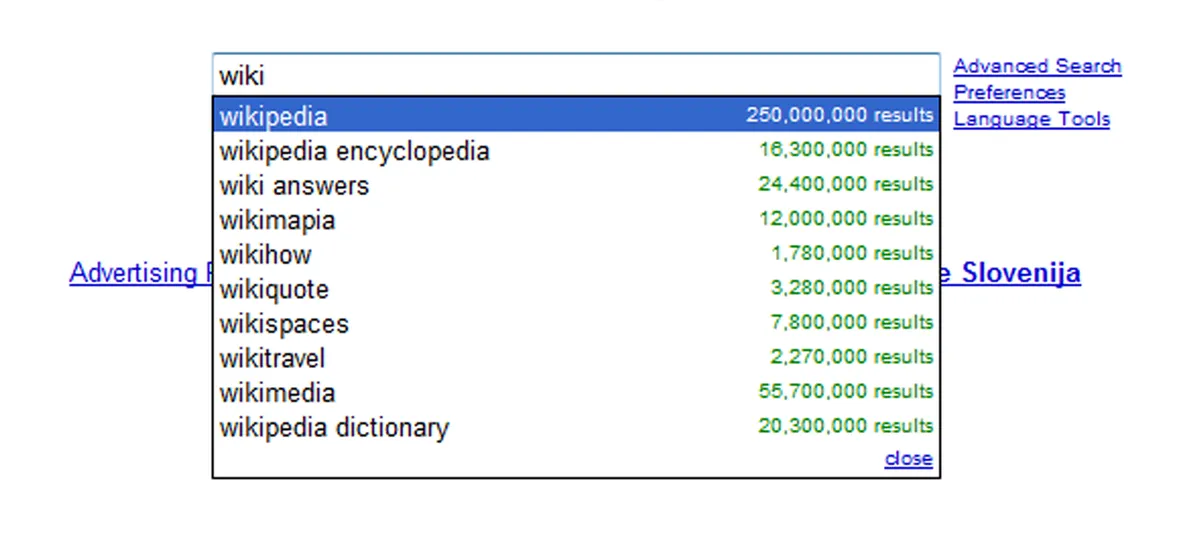
Google Suggest's drop-down of completions fetched from the server as you type, one of the 2004-05 Google apps that Jesse James Garrett's Ajax essay held up as examples. Google, Public domain
Key details
- When
- 2005 (essay published 18 February 2005)
- Who
- Jesse James Garrett, Adaptive Path
- Where
- Adaptive Path
- Answered
- It gave a name to the pattern behind Gmail and Google Maps, replacing page-reload interactions with asynchronous background requests.
- Led to
- Web apps that update in place without reloading became common, and W3C released a first XMLHttpRequest draft in April 2006.
Ajax
Named a pattern so teams could discuss it, and web apps that updated in place became the expected norm.
Facts
- Garrett published "Ajax: A New Approach to Web Applications" on February 18, 2005. 2
- The essay lists XHTML and CSS, the DOM, XML and XSLT, XMLHttpRequest, and JavaScript as the technologies Ajax combines. 2
- Garrett cited Google Suggest, Google Maps, Orkut, Gmail and Google Groups as examples of the approach. 2
- Garrett wrote that the name is shorthand for Asynchronous JavaScript + XML and that Ajax is an approach, not something you can download. 2
- XML is no longer required for Ajax, and JSON is often used instead. 1
Quirks
- Garrett said he coined the name because he needed something shorter than "Asynchronous JavaScript+CSS+DOM+XMLHttpRequest" to use with clients. 2